

AI in Lesson Planning and Educational Writing
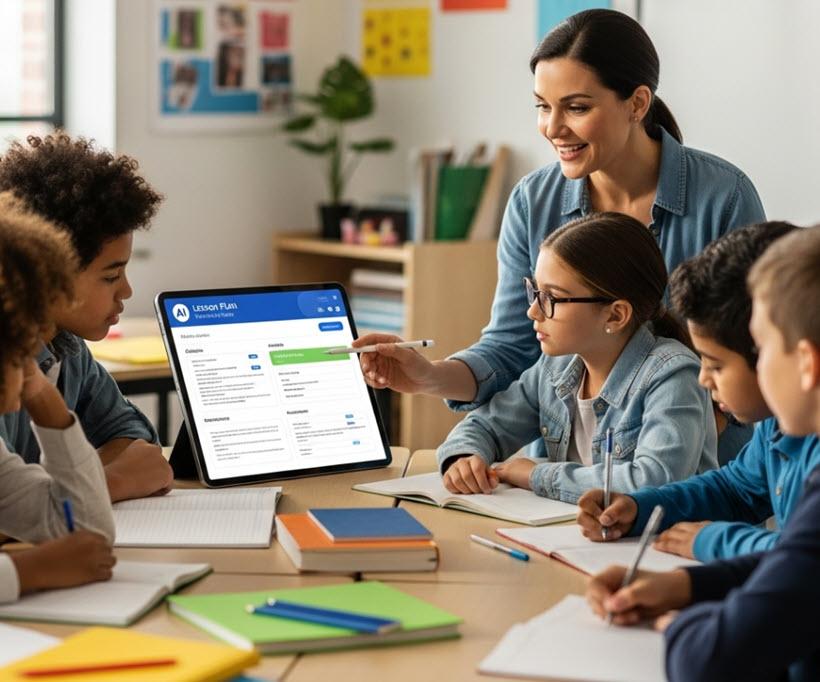
The concept of artificial intelligence (AI) is transforming the way teachers plan and create instructional materials. Conventionally, teachers take a lot of time in planning lessons, designing tests, writing teaching resources, and differentiation of content to suit various learners. With AI tools, much of this work can be automated allowing teachers to be more pedagogic and to pay more attention to the students.
In both lesson writing and planning, AI-powered solutions can automate a variety of tasks that might be taken into consideration such as writing lesson plans and quizzes, writing instructional materials, and editing written communication. The tools are built on the massive language models (LLM) and generative AI to generate personalised liberations depending on user requests, learning goals, and parameters.
The AI positively influences Lesson Planning.
- Time: AI can cut down on the number of work hours usually spent on creating elaborate lesson plans, worksheets and formative tests. Through fast production of draughts, instructors will have a larger amount of time to teach and to cater to the needs of the students.
- Personalization: For a variety of AI tools, the customization is possible depending on grade level, subject, student needs, and learning goals. This enables differentiation of different student profiles.
- Creativity and Engagement: To become more engaged with the lessons, such tools as the generation of visual aids, interactive activities, comics, or thematic work sheets can be suggested.
- Consistency with Standards Other platforms match the output of the lesson with the standards of education (e.g. Common Core), and ensure that they are in compliance with curricular frameworks.
- Enhanced Quality of written work: AI writing machines facilitate polishing lesson instructions, education goals, emails to father, and conversations with educators.
- Assessment Support: AI can also help in planning and preparing quizzes, grading support and feedback- enhancement of the efficiency of evaluation and feedback loop.
Difficulties and Complexities.
Although the benefits are obvious, the implementation of AI in education needs attention:
- Precision and Quality Assurance: Pedagogy Sometimes AI results are not sufficiently pedagogical and may contain mistakes that need to be adjusted by aggregation or to be reviewed and edited by a teacher.
- Ethical Use: Teachers need to make sure that the information about the students is accessed safely and that AI technologies are not abused to the detriment of the necessary human judgement.
- Professional Development: It is possible that teachers will require training on the effective use of AI, particularly when it comes to timely formulation and output customization.
Case studies and research also show that the specifically designed AI platforms, particularly those involving teacher involvement with AI help, might be very helpful in both planning efficiency and the quality of plans and reducing the cognitive burden on the teaching staff.
Artificial Intelligence: Lesson Planner and Writer.
The list of AI tools which can help teachers in lesson planning, developing curriculum, writing materials, and other instructional tasks is below and categorised.
1. Artificial Intelligence Lesson Content Generators and Planning.
These tools are used to produce structured lesson plans, activities, quizzes and even complete instruction units.
LessonPlans.ai - It creates lesson plans, including step-by-step teaching activities and teaching engagement ideas, based on the subject taught and the students' grade level. Offers free trial options.
TeachAny- A teacher-friendly AI platform that relies on lesson planning and mental health teaching, lesson quiz and worksheet generation, differentiation, and lesson content summaries.
TeachQuill – Offers more than 40 AI based lesson planning, assignments, communication, content creation tools as based on standards such as CCSS/NGSS.
Teachy AI-based teaching assistant generating entire lesson content, slides, quizzes and interactive content using templates and automatically customizable.
StudyBlaze (Teacher AI Lesson Plan feature) - Generates lesson materials, including interactive quizzes, flashcards, and worksheets based on the current curricula and with the help of AI.
2. Learning about Artificial Intelligence Writing and Content Revision Tools.
Although they do not apply to the world of education, these tools are priceless when it comes to writing and editing lesson teachings, teacher mails, and instructional notes.
Wordtune - Another generative AI writing assistant, which provides users with the possibility to paraphrase, enhance readability, and find alternative ways to refine a text draught.
Grammarly (AI Agents) - It offers high-level AI agents in its writing device so that it assists in enhancing writing quality, structure, grammar, tone, and citation styles. Even though these features are generic, they prove to be much helpful when it comes to lesson plan narratives and professional communication.
Notion AI - built into the Notion workspace, the Notion AI helps in drafting, summarising and refining lesson notes, planning documents, as well as templates of educational content.
3. Creative & Engagement Tools
These aids visual learning and student engagement aspects of lesson design.
LlamaGen.AI- It is larger than planning and helps create AI generated comics and visual storytelling which can be integrated into lessons by the teacher to make complex ideas easier to understand.
4. General Artificial Intelligence (AI) Assistants and Work Dress Tools.
These AI assistants can however be adapted to lesson planning prompts and tasks though they are rather generic.
ChatGPT (OpenAI) ChatGPT is broadly applicable in brainstorming sequence of lessons, creating initial lesson draughts, creating quizzes questions and generating examples/explanations.
Google AI tools (Gemini, NotebookLM through Google Classroom) – AI-based education services will be used to help generate lesson plans, create math problems, and summarise study material, used in the classroom processes.
Lesson content Generators and other productivity platform extensions (e.g. Docs /Drive) Sometimes as a browser add-on or integrated into a productivity platform Brisk Teaching extensions etc. Conversion of web resources into instructional content (community insights).
5. Other interesting Tools (Community) and Emerging.
Teacher communities state that they have experimented with:
Writable (AI-based grading and feedback, applicable in lesson plan-associated assessments).
Curipod, Otter.ai, Proofademic, etc. - Tools that have been mentioned by educators to design an interactive lesson, lecture transcription, and integrity checking.
Most effective ways to use AI in Lesson Planning.
Sharpen your purpose: Be able to specify learning goals, learning standards and outcomes prior to the prompting of any AI tool.
Check and revise results: Fact-check AI-generated works to check against it is accurate, suitable and based on the lesson.
Hybridise tools: Draft with generative AI, and assessments, visuals, or refinements with specific tools.
Pedagogy Control:- AI could be used to make tasks even simpler, but not instructing the teacher.